
 English
 中文简体
中文简体 Español
 Português
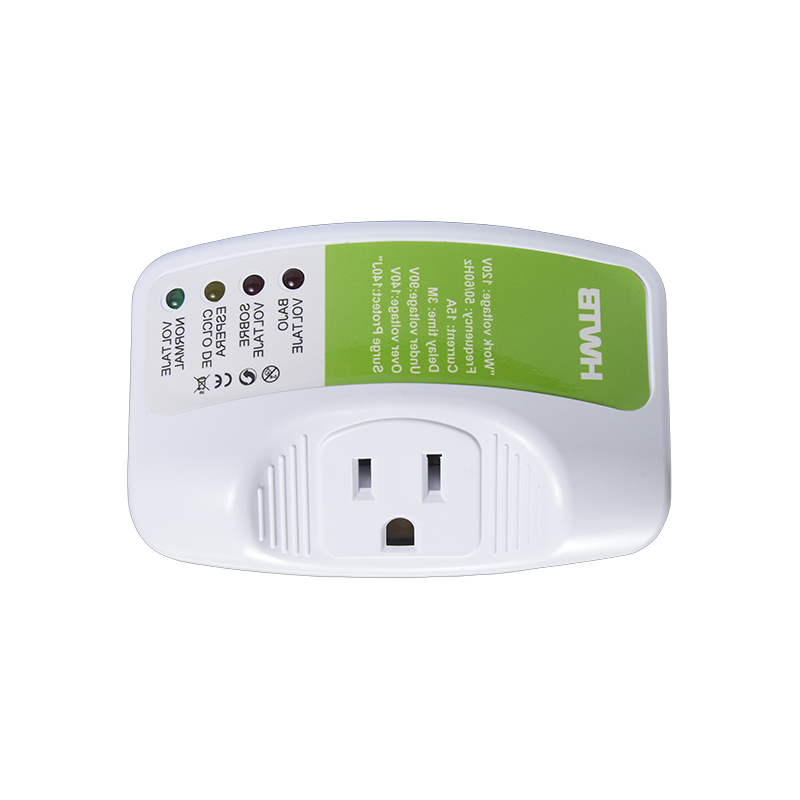
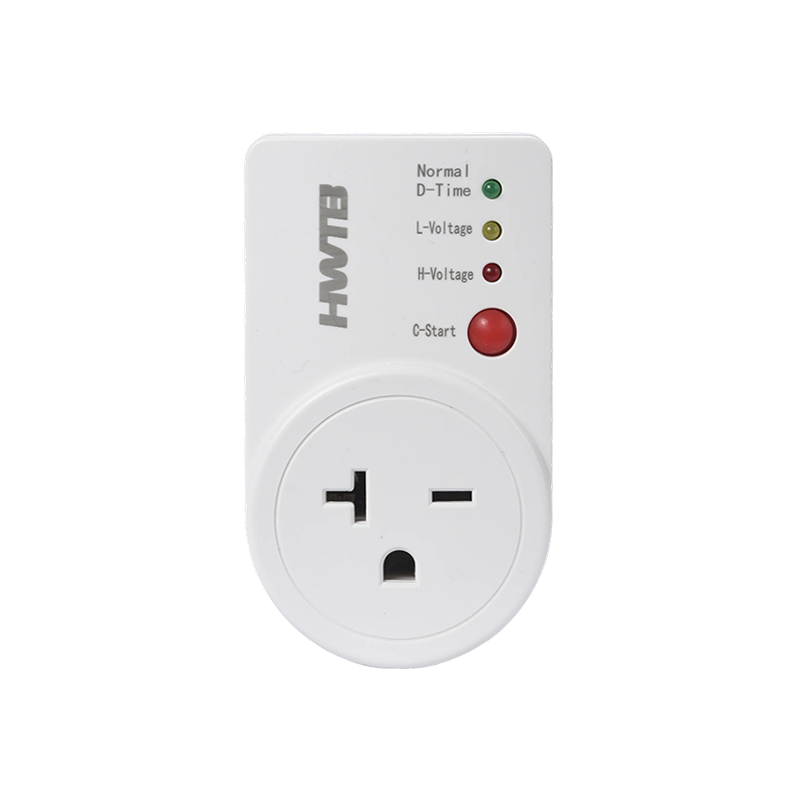
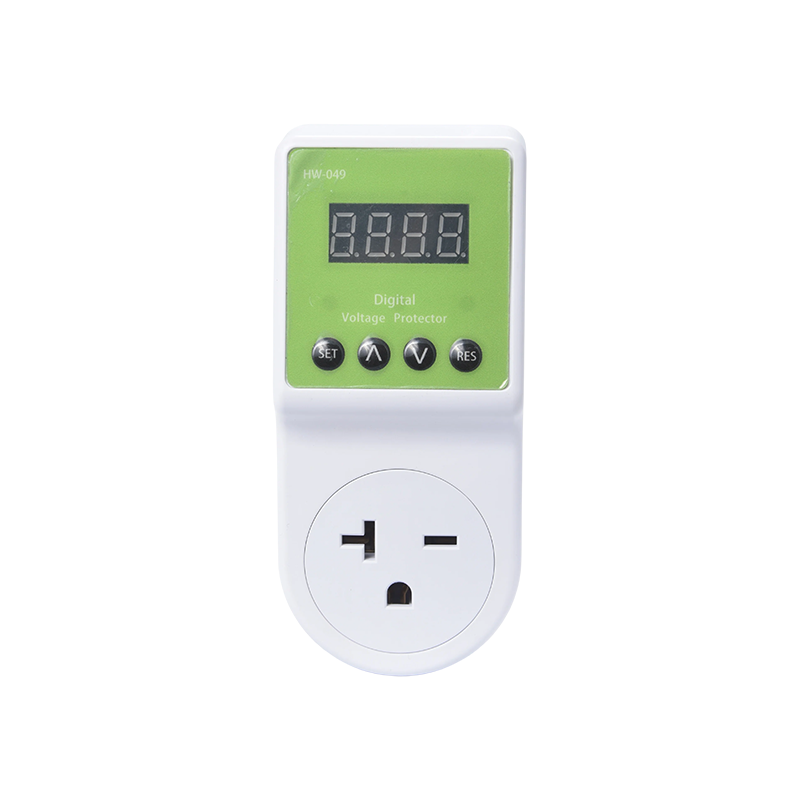
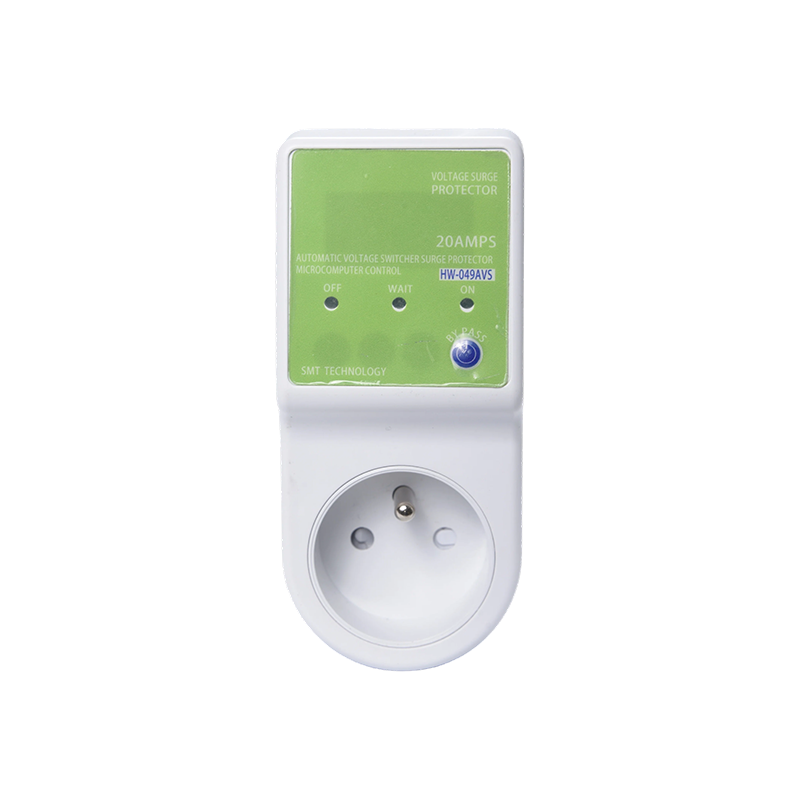
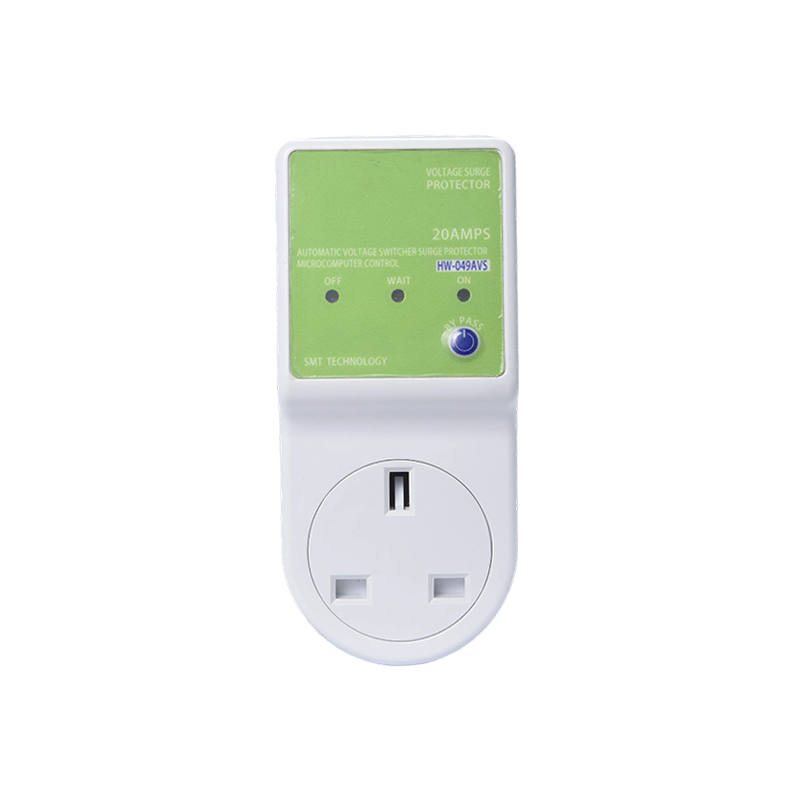
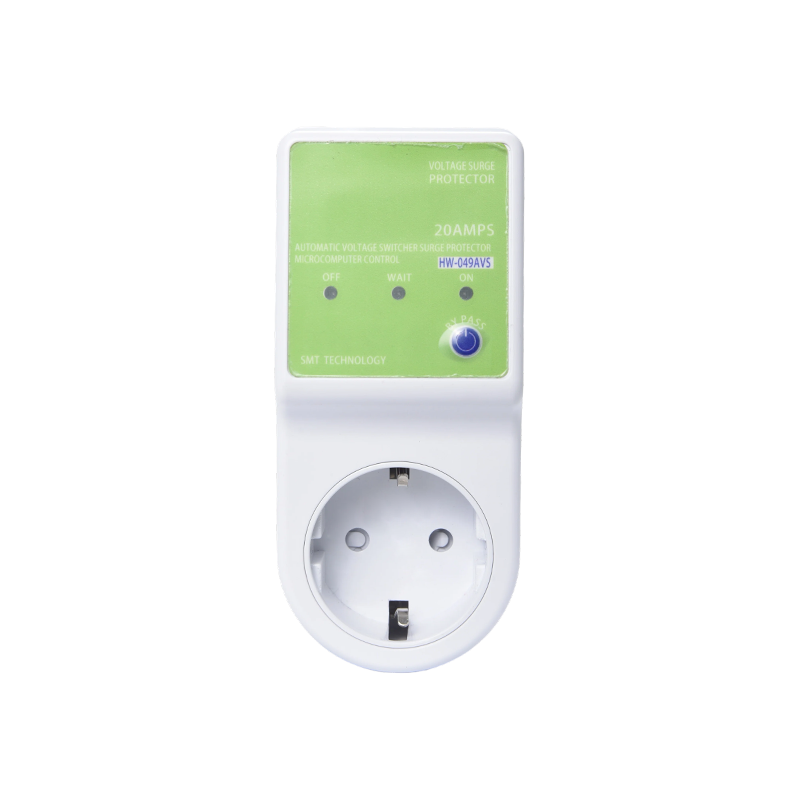
The low and high voltage protector has one primary job: it monitors the incoming supply and disconnects the load whenever the voltage stays above or ...
READ MORE
Industry News
Home / News / Industry News / Voltage Spike Protector Outlet: What It Is, Key Specs, and How to Choose
Voltage Spike Protector Outlet: What It Is, Key Specs, and How to Choose
Update:21-09-2026
Voltage Spike Protector Outlet: What It Is, Key Specs, and How to Choose
Behind many appliance failures is not a dramatic lightning strike but a brief, invisible spike — or a brownout that lasts just long enough to damage. A voltage spike protector outlet is the quiet component that stands between an unstable grid and an expensive compressor.
A commercial kitchen lost two refrigerator compressors and one display-case controller within eighteen months. Each time a nearby industrial zone switched heavy loads, the grid sagged sharply, and a recovery spike followed on reconnection. After a voltage protector outlet was installed at each refrigeration point, the failures stopped. Most voltage damage is not one dramatic event, but repeated small excursions that accumulate inside capacitors, windings, and start relays.
The operating logic is straightforward. The outlet measures incoming voltage continuously. When the line rises above the upper threshold, falls below the lower threshold, or suffers a brief spike, an internal relay opens and isolates the appliance. Once the supply returns to a safe window, the outlet reconnects the load after a preset delay. This combination of continuous monitoring, physical disconnection, and timed recovery is what separates a genuine voltage protector from a power strip.
What a voltage spike protector outlet actually protects against
Three kinds of voltage disturbance matter. A voltage spike is a very short, high-energy transient, typically lasting from microseconds to a few milliseconds, caused by lightning, capacitor bank switching, or disconnection of large inductive loads. Overvoltage is a sustained condition above the nominal level, such as 253 V on a 230 V network. Undervoltage, the reverse, leaves the line below nominal for seconds or minutes.
Each type damages equipment differently. Spikes erode capacitors and semiconductor junctions in power supplies. Sustained overvoltage overheats motors, stresses insulation, and accelerates compressor wear. Undervoltage forces motors to draw more current for the same torque, slowly burning windings. A protector outlet addresses all three by disconnecting the load whenever the measured value leaves the safety window.
A protector that opens too late is a witness; one that opens too early is a nuisance. Protection lives between accurate thresholds, a fast relay, and an honest restart delay.
For deeper reading on working principles and types, see this comprehensive guide to voltage protectors.
Why the existing wall outlet is not enough
The outlet behind the appliance is a connection point, not a protection device. It cannot sense voltage quality, and it cannot break the circuit when conditions turn abnormal. A nameplate's nominal voltage is not the same as the actual voltage at the terminal. Neutral faults, shared transformers, aging wiring, and inrush currents from neighboring equipment create deviations that are invisible but harmful.
Equipment at highest risk:
- Motor-driven appliances: air conditioners, refrigerators, and washing machines, where failures trace to overvoltage and brownouts.
- Electronics with switching power supplies: televisions, routers, and medical monitors, where repeated spikes degrade capacitors and transistors.
- Equipment that restarts automatically: display cases and vending machines that re-energize after a dip and draw high start-up current.
A surge-suppression power strip clamps transients but does nothing for overvoltage or brownout. Many products labeled surge protector outlet are exactly that. Real protection requires a device that cuts the power and holds it off until the line is stable — the behavior a voltage spike protector outlet is designed to deliver.
In practice, single-phase equipment tolerates roughly 10 percent above or below nominal. An adjustable threshold lets the installer set cut-off closer to the appliance's true limit.
Key specifications to compare before you order
Buyers often reduce this category to joule rating and price. Four specifications matter more: trip threshold, restart delay, current rating, and load capacity.
| Specification | What it means | Typical values | Selection implication |
|---|---|---|---|
| Trip threshold | Voltage level at which the relay opens the circuit | 110 V, 120 V, 220 V, 230 V; adjustable or fixed | Must match the local grid and the appliance tolerance |
| Restart delay | Time between voltage recovery and reconnection | 30 seconds, 60 seconds, 3 minutes, 5 minutes | Longer delay protects compressors from short-cycling |
| Continuous current | Current the outlet can pass continuously | 5 A, 10 A, 13 A, 15 A, 30 A | Must exceed the appliance running current with margin |
| Maximum load | Power capacity of the protected channel | Up to 3300 W on 230 V / 15 A models | Keep headroom for start-up inrush of motors |
| Certification | Factory and product compliance | CE, ISO 9001 production processes | Required for customs entry and liability control |
Threshold adjustability separates a generic component from a tailored solution. Where nominal voltage is 220 V but lines dip to 200 V, a fixed 230 V protector would trip constantly; an adjustable version can be set to the real supply profile. Restart delay matters equally: after a brownout, compressors need time to equalize pressure, and a two-to-five-minute delay prevents the repeated inrush that kills start relays.
Match the protector to the grid, the plug, and the load
The physical format must follow the destination market. European applications are predominantly 230 V single-phase: a 15 A adjustable protector covers residential air conditioners and heat pumps, while 30 A versions suit large split systems, commercial refrigeration, and high locked-rotor loads.
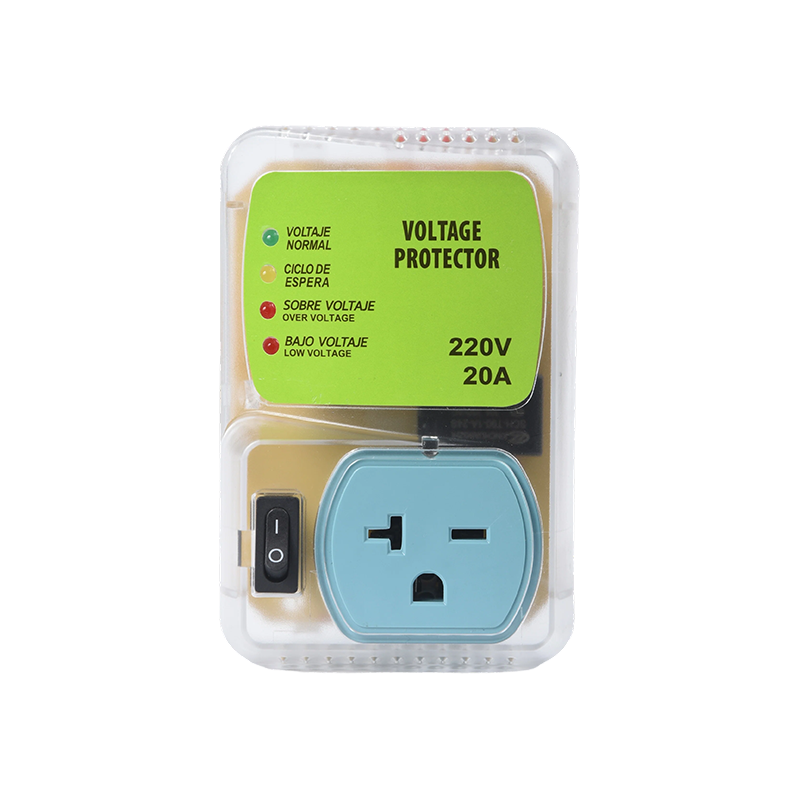 220V 15A Adjustable Automatic Voltage Protector for Air ConditionersDesigned for 230V single-phase European systems, this protector offers adjustable undervoltage cutoff from 170V to 197V and overvoltage protection at 255V, ideal for residential air conditioners and heat pumps.View Product →
For US and Canadian projects, the split-phase supply creates specific phase-to-neutral conditions, and a 120 V protector must account for how voltage behaves during neutral faults. A 120 V 30 A automatic voltage surge protector fits large window units, RV hookups, and workshop circuits.
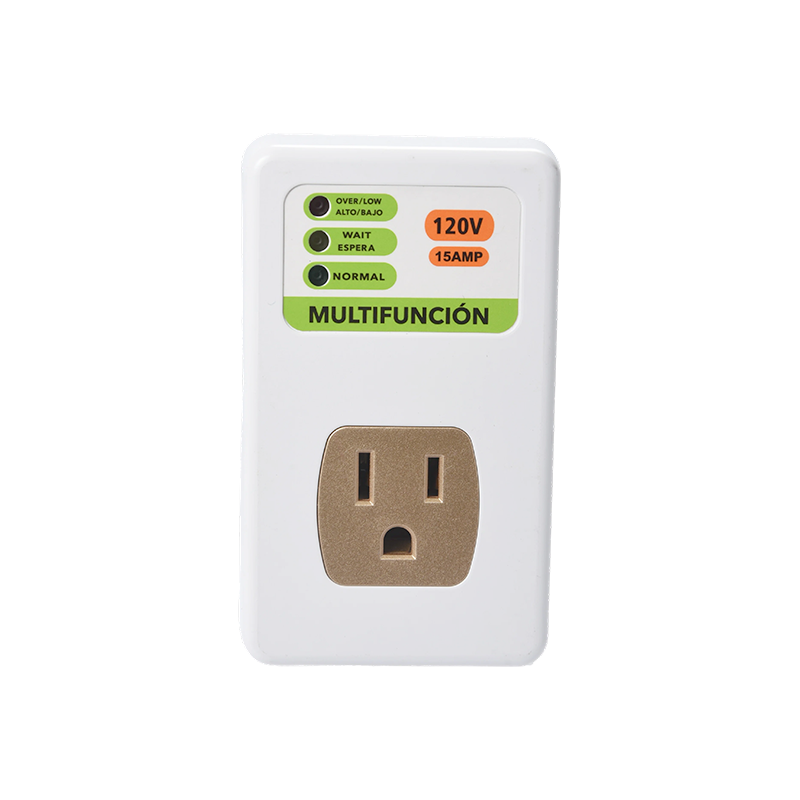 120V 30A Automatic Voltage Surge Protector for Heavy-Duty AppliancesWith 30A/3300W capacity, this protector monitors 120V circuits continuously, cutting off between 90V and 140V and featuring a 180-second restart delay, suitable for large window units, RV hookups, and workshop circuits.View Product →
Where several devices share one point, a multi-outlet protector that also clamps transients is the more efficient approach. It protects the entire cluster as one zone instead of requiring a separate unit for each gadget — ideal for entertainment centers, home offices, and point-of-sale installations.
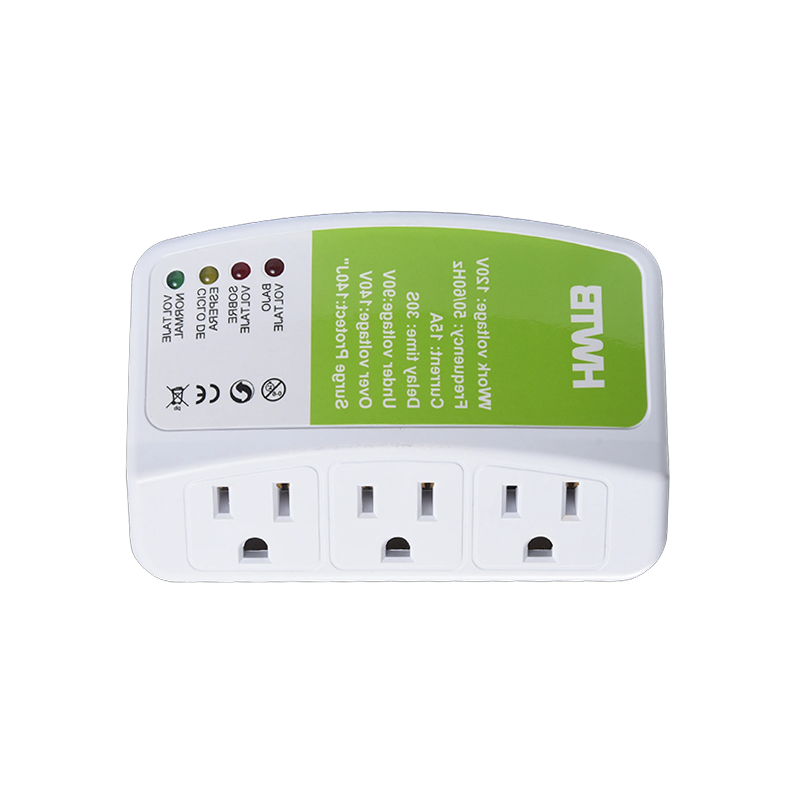 120V 15A Multiple Outlet Automatic Voltage Surge ProtectorThis multi-outlet protector safeguards connected devices with built-in surge suppression up to 125J, undervoltage cutoff below 90V, and a 3-minute delayed restart, perfect for entertainment centers, offices, and POS installations.View Product →
Do not confuse a voltage protector outlet with a transient-only surge protector. A surge protector clamps spikes but lets overvoltage and brownouts pass through. A voltage protector cuts the load off. For compressor-based equipment, the cut-off function is not optional.
What importers and brands should specify
For buyers sourcing protector outlets for a brand, catalog, or distribution channel, the question chain is simple: which socket standard, nominal voltage, trip thresholds, restart delay, and certifications does the destination market require? Answering these before the RFQ shortens the entire development cycle.
A manufacturer with internal design resources and full-process quality inspection can adjust threshold ranges, restart delay, plug types, housing color, and printed logos without reinventing the product. That is the practical value of OEM and ODM sourcing. The complete lineup of voltage protectors shows how one protection engine adapts to socket standards and current ratings.
When threshold, delay, and current rating are specified correctly, a protector outlet effectively ends repeated field failures from grid instability, with the largest warranty relief appearing on refrigeration and HVAC lines.
Avoid selecting a product solely by price. If the relay contact rating is below the load, or the restart delay is shortened to win a spec sheet, the protector will fail — or worse, fail to protect. Validate trip-point accuracy and restore delay on samples before ordering.
A small device carries most of the protection burden
An outlet of this type is a low-cost component with an outsized job. It monitors every supply cycle, decides in milliseconds, and disconnects the appliance before voltage can damage it. The selection rules do not change across markets: match the current rating to the load, choose an adjustable threshold so the device maps to the real grid, and insist on a restart delay long enough for compressors.
Whether the application is a split air conditioner, a window unit, or a wall of electronics, the requirement is the same: accurate thresholds, honest current capacity, and a relay you can trust to open on time. The product is small; the protection it provides is not.
Recommended Products
News
-
-
With the improvement of residents' awareness of electrical safety and the rapid development of the smart home market, over/under voltage protector sm...
READ MORE -
After a grid fault pushes the voltage in your home above 280 V or below 165 V for even a few seconds, the compressor in your refrigerator or air cond...
READ MORE -
Look at the label on almost any surge protector and you will see voltage figures that seem to contradict each other: a device made for a 120 V circui...
READ MORE -
With the continuous increase of electrical safety supervision, the certification system of the over/under voltage protector smart socket industry is ...
READ MORE -
With the improvement of residents' living quality and the enhancement of awareness of electrical safety, consumers' demand for over/under voltage pro...
READ MORE

Ningbo Haowei Electric Technology Co., Ltd.
-
Address
No. 261 Lvyuan 2nd Road, Chongshou Town, Qianwan New Area, Ningbo City, Zhejiang Province, China
-
Mobile
+86-13566611998
-
Email
Copyright © Ningbo Haowei Electric Technology Co., Ltd. Rights Reserved.
 Custom Smart Timer Plug Manufacturers