
 English
 中文简体
中文简体 Español
 Português
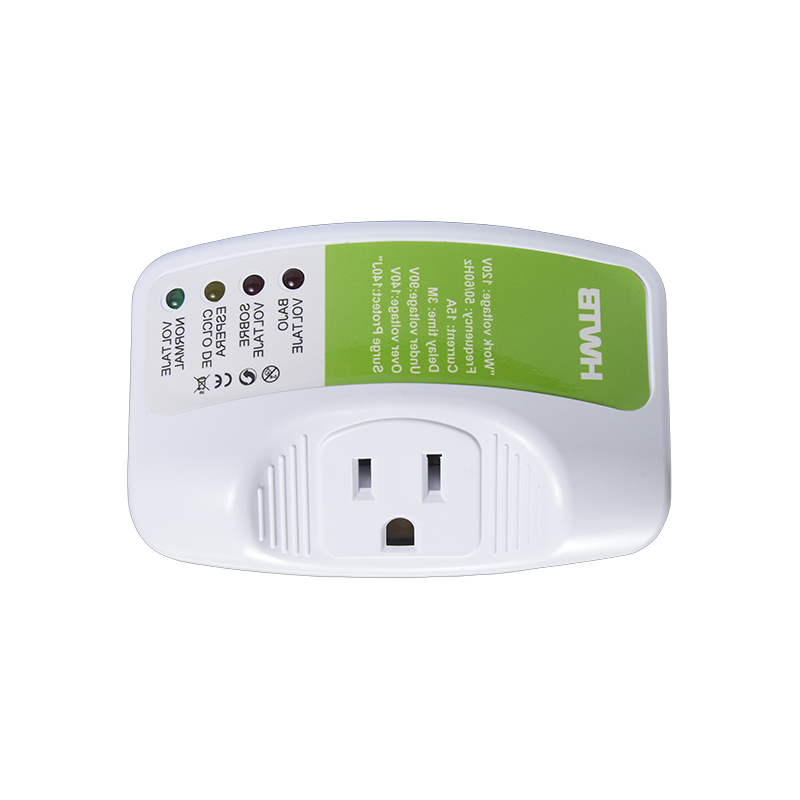
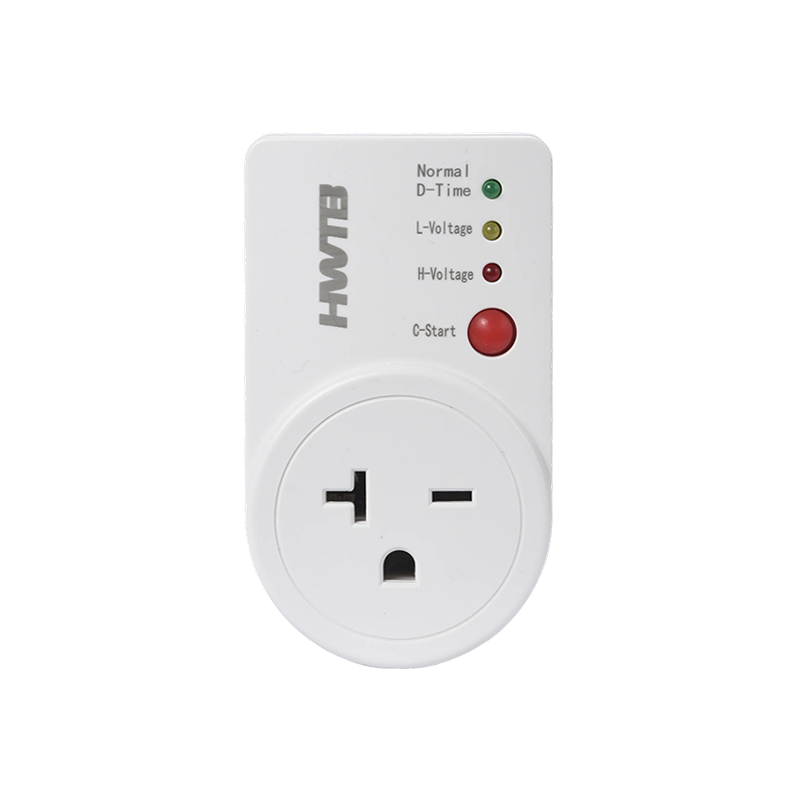
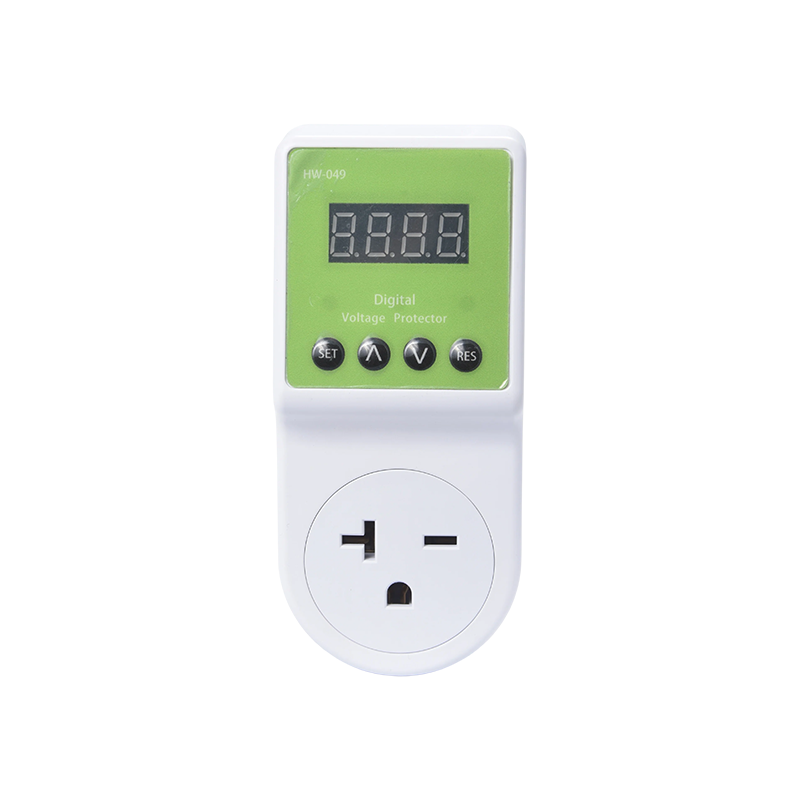
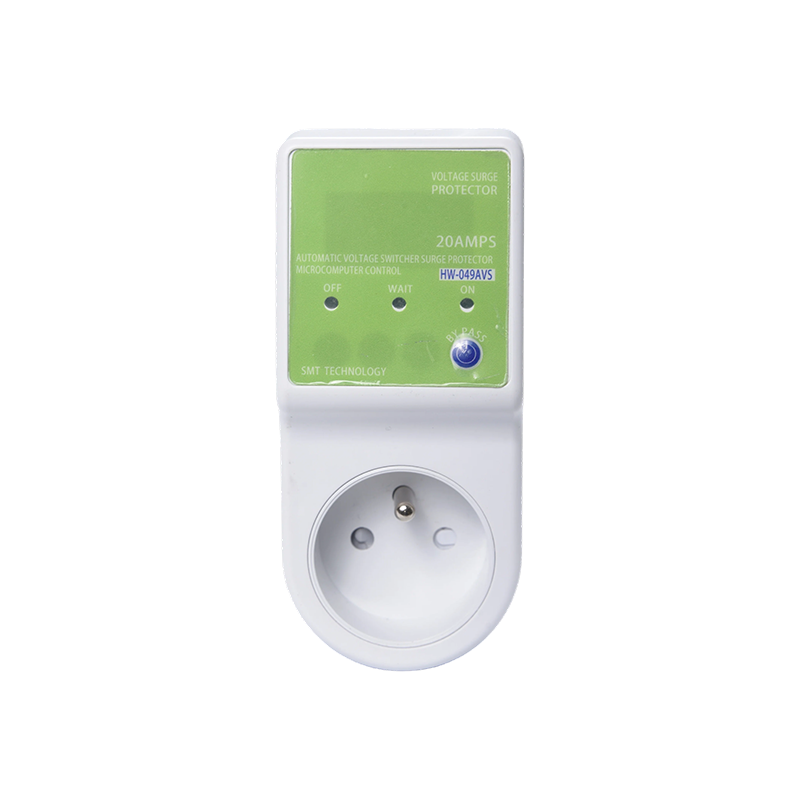
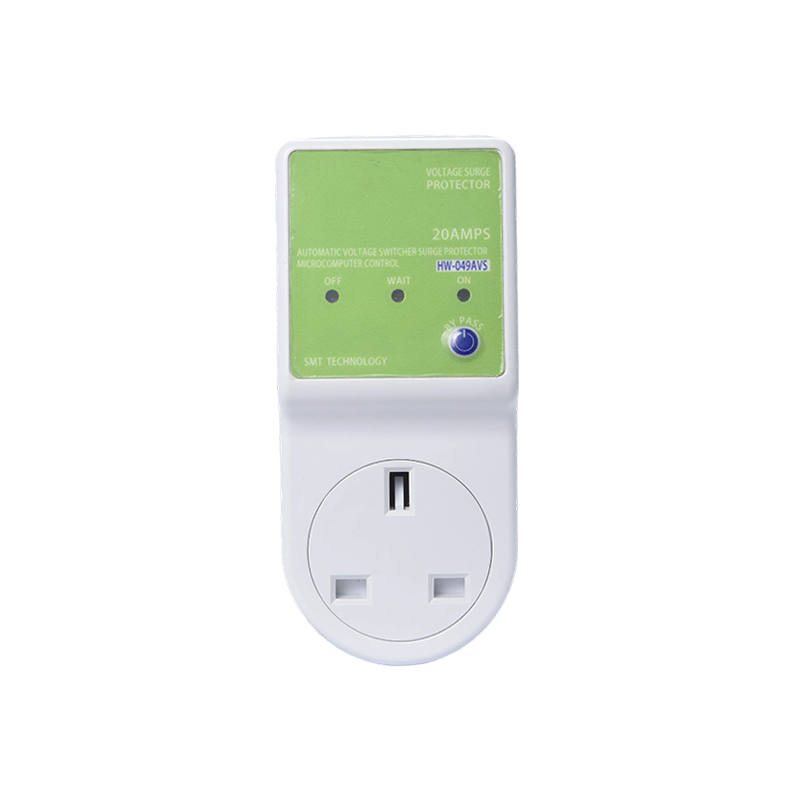
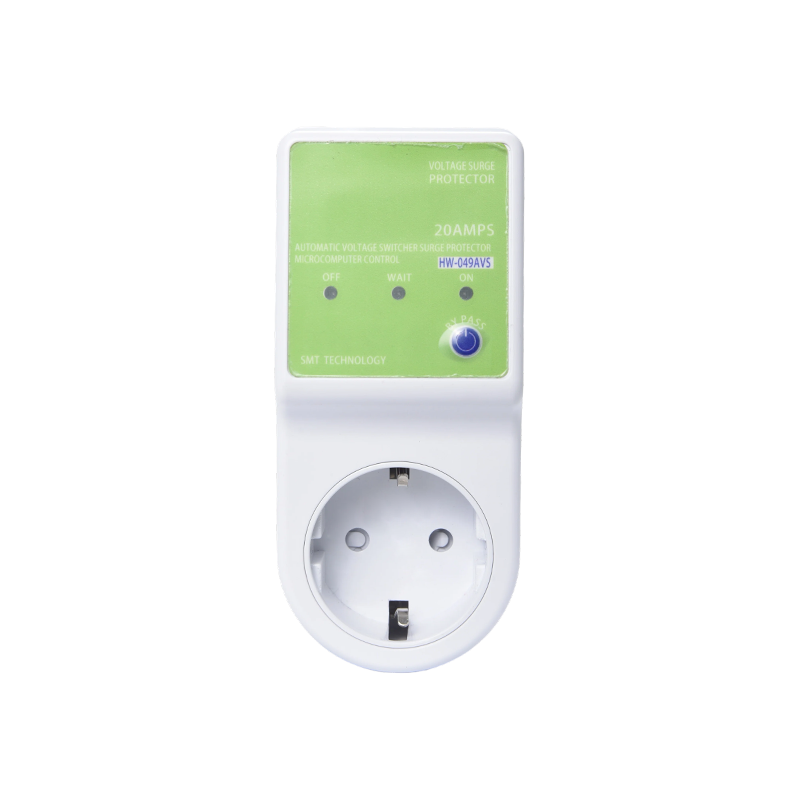
After a grid fault pushes the voltage in your home above 280 V or below 165 V for even a few seconds, the compressor in your refrigerator or air cond...
READ MORE
Industry News
Home / News / Industry News / Low and High Voltage Protector: How It Works and How to Choose the Right One
Low and High Voltage Protector: How It Works and How to Choose the Right One
Update:10-08-2026
The low and high voltage protector has one primary job: it monitors the incoming supply and disconnects the load whenever the voltage stays above or below a safe range. It is also called an automatic voltage protector, an over and under voltage protector, or a voltage guard. This article explains how it works, how it differs from a surge protector, and what to check when buying one for your grid.
What Does a Low and High Voltage Protector Actually Do?
Unlike a voltage stabilizer, a low and high voltage protector does not try to correct voltage. It leaves the supply alone and simply interrupts power to the connected load when an abnormal condition persists. Low voltage protection trips during brownouts, weak line wiring, or the sag that happens when a high-power motor starts nearby. High voltage protection trips during neutral faults, transformer failures, or accidental connection to a higher supply voltage.
After the abnormal condition disappears, the protector reconnects the load, usually after a short delay. This repeated action makes it a practical first line of defense for expensive appliances.
Voltage Protector vs Surge Protector: Not the Same Job
The single most important difference is duration. A surge protector handles short-duration spikes in microseconds; a low and high voltage protector handles sustained voltage conditions that last seconds, minutes, or even hours.
A surge protector cannot do the job of a voltage protector, because it does not disconnect the load. If your grid stays at 175 V on a 230 V system, a typical surge protector will pass that undervoltage straight through to the appliance. Conversely, a voltage protector is not designed to absorb a lightning impulse. The two devices are complementary, not interchangeable.
| Feature | Low and high voltage protector | Surge protector |
|---|---|---|
| Main event | Sustained undervoltage or overvoltage | Brief voltage spikes and transients |
| Action | Disconnects the load | Clamps and diverts excess energy |
| Typical cause | Neutral fault, brownout, transformer issue | Lightning, switching operations, inductive loads |
| Reusable | Reconnects automatically after supply recovers | Protection elements degrade and may need replacement |
If you need protection against both failure modes, the common solution is to install a voltage protector for the sustained conditions and a surge protector for fast transients. Some voltage protectors include basic surge clamping as a secondary feature, but the two functions should not be confused during product selection.
How a Low and High Voltage Protector Works
Threshold Detection
The protector contains a voltage-sensing circuit that measures the root mean square voltage of the incoming supply. The measured value is compared with two reference points: a low-voltage trip threshold and a high-voltage trip threshold. In adjustable models, both points can be set with knobs or small trimmers. In fixed models, the thresholds are selected at the factory and cannot be changed in the field.
Trip Delay and Reconnection
To avoid nuisance trips, the protector does not disconnect after a single noisy cycle. It waits for a short confirmation period, typically a few seconds, before opening the relay. Once the relay opens, the load is isolated. When the grid recovers, another built-in delay prevents the appliance from restarting too quickly. This restart delay is especially important for compressors, which can be damaged by short-cycle restart.
What It Does Not Do
A low and high voltage protector does not regulate voltage, does not clean up waveform distortion, and does not supply power during an outage. It is a safety switch with intelligence, not a backup power source. That distinction matters when you plan a protection system: a protector reduces the risk of damage from abnormal voltage, but it cannot turn an unstable supply into a clean one.
Key Parameters to Evaluate Before You Buy
The correct device depends on your nominal grid voltage, load current, and the type of appliances you need to protect. The following points come up again and again in OEM conversations.
- Voltage rating. A 230 V 50 Hz European model is not a direct match for a 120 V 60 Hz North American circuit. Choose the protector according to the nominal line voltage and frequency of the target market.
- Current rating. The protector's maximum current must be equal to or greater than the full-load current of the appliance. Common product levels are 15 A, 30 A, 13 A, 10 A, and 5 A.
- Adjustable or fixed thresholds. Fixed thresholds simplify large orders because every unit behaves the same. Adjustable thresholds help when appliances have different tolerance limits or when the local grid is known to be weak.
- Restart delay. For refrigerators, air conditioners, and water pumps, a restart delay of at least 1 minute is desirable. Some units have a fixed delay; others allow adjustment.
- Physical configuration. Single-socket, in-line, and multi-outlet versions are available. Multi-outlet protectors cover several appliances, but the maximum current limit must be clearly marked.
When comparing quotations, ask for the exact trip thresholds and the delay time for low voltage, high voltage, and reconnection. Small differences in these values have a large effect on whether the product actually protects a compressor in the field.
Why Air Conditioners and High-Power Appliances Need Dedicated Protection
Air conditioners are the most common reason importers add low and high voltage protectors to their product range. The compressor motor draws high starting current, and the control board contains sensitive power supplies. A brownout causes the motor to overheat; a sudden voltage spike can destroy the control board in milliseconds.
Haowei Electric builds dedicated models around this workload. For 220 V single-phase air conditioners, the 220 V 15 A adjustable voltage protector for air conditioners monitors both low and high voltage and includes a compressor-friendly restart delay. Higher-capacity units can use a 30 A version with the same protection logic.
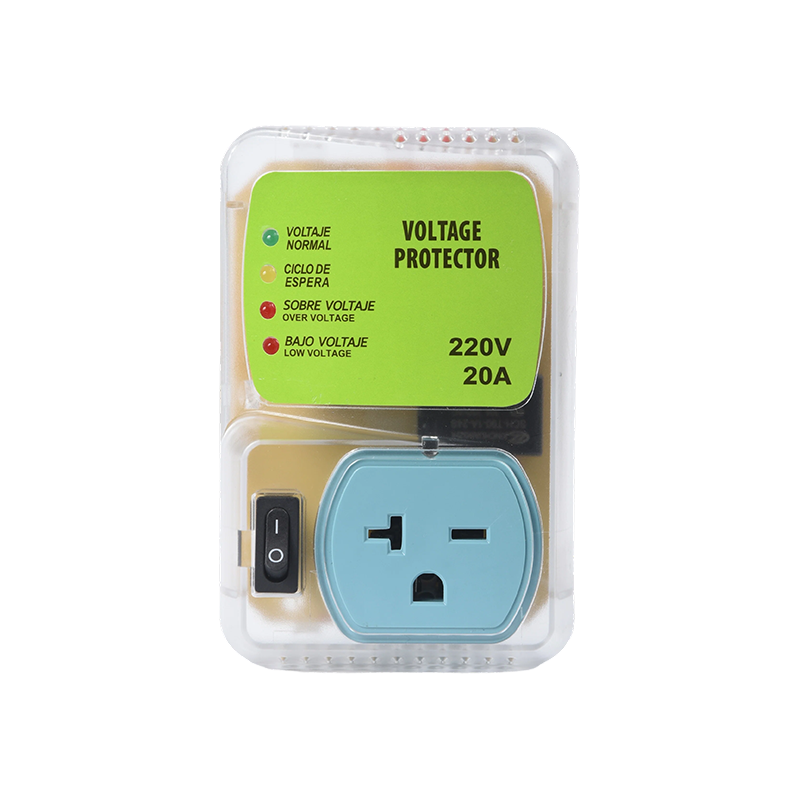 Wholesale HWTB-V002+CE 220V 15A Adjustable Automatic Voltage Protector for Air Ningbo Haowei Electric Technology Co., Ltd is China wholesale HWTB-V002+CE 220V 15A Adjustable Automatic Voltage Protector for Air Condi...View Product →
Water heaters, induction cooktops, washing machines, and commercial refrigeration equipment benefit from the same protection. The more expensive the appliance, and the more often the local grid fluctuates, the more an automatic protector pays for itself.
Matching the Protector to Your Grid and Load
Product selection usually starts with the market. A European importer needs a 220-240 V protector with a compatible socket; a North American importer needs a 110-120 V protector for standard outlets. The same current range appears in both product families, but the plug geometry and trip thresholds must be configured for the local supply.
| Grid standard | Nominal voltage | Common current ratings | Typical loads |
|---|---|---|---|
| EU standard | 220-240 V, 50 Hz | 15 A, 30 A | Air conditioners, water heaters, ovens |
| US standard | 110-120 V, 60 Hz | 5 A, 10 A, 13 A, 15 A, 30 A | Window ACs, power tools, small appliances |
| US-style 230 V | 230 V, 60 Hz | 15 A | Specialized split-phase equipment |
For North American air-conditioning circuits, the 110 V 30 A adjustable voltage protector for air conditioners is a common match for 30 A branch circuits. For general appliance protection, a 15 A version is usually enough.
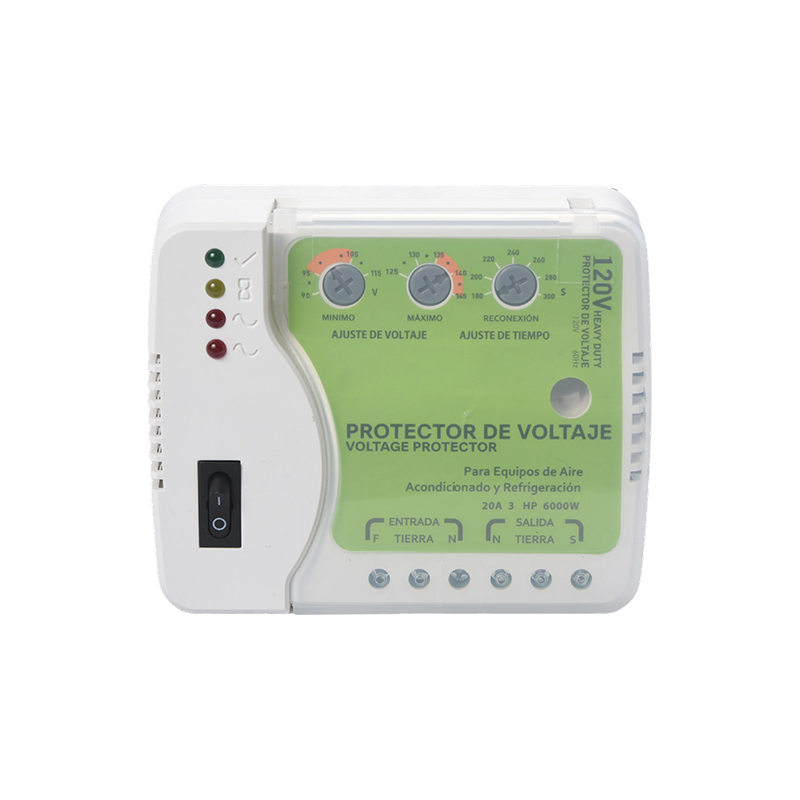 Wholesale HWTB-V003-US 110V 30A US Adjustable Voltage Protector For Air ConditioNingbo Haowei Electric Technology Co., Ltd is China wholesale HWTB-V003-US 110V 30A US Adjustable Voltage Protector For Air Conditioners ...View Product →
You can compare the complete lineup of EU-standard voltage protector models and US-standard voltage protector models before contacting the factory.
Why Buyers Work Directly With a Low and High Voltage Protector Manufacturer
A low and high voltage protector is more than a switch. It has to pass load testing, behave predictably during abnormal line conditions, and match the electrical safety requirements of the destination market. Buying from an engineering manufacturer, instead of from a company that simply relabels generic units, makes a measurable difference in reliability.
Haowei Electric designs its protector circuits in-house, runs a production line with full-process quality inspection, and operates under CE and ISO 9001 standard certification. The company also accepts OEM and ODM orders, so you can adjust the rated current, plug type, threshold range, restart delay, housing color, and packaging to suit your brand.
For a deeper technical walk-through of the internal circuit and component options, see our guide to voltage protector working principles and types.
Final Thought
The cost of voltage damage appears only after the fault has passed, not before. A low and high voltage protector is one of the lowest-cost ways to help appliances survive unstable grids. For buyers, the important decisions are not complicated: match the voltage, match the current, choose a sensible restart delay, and confirm that the supplier can document its production and testing process.
Recommended Products
News
-
-
With the improvement of residents' awareness of electrical safety and the rapid development of the smart home market, over/under voltage protector sm...
READ MORE -
With the continuous increase of electrical safety supervision, the certification system of the over/under voltage protector smart socket industry is ...
READ MORE -
The Direct Verdict on Grid Instability and Automated Power Protection Modern electrical equipment operating on the United States grid requires active...
READ MORE -
With the improvement of residents' living quality and the enhancement of awareness of electrical safety, consumers' demand for over/under voltage pro...
READ MORE -
What Is a Voltage Protector? A voltage protector is an electrical device that monitors incoming line voltage and automatically disconnects power to c...
READ MORE

Ningbo Haowei Electric Technology Co., Ltd.
-
Address
No. 261 Lvyuan 2nd Road, Chongshou Town, Qianwan New Area, Ningbo City, Zhejiang Province, China
-
Mobile
+86-13566611998
-
Email
Copyright © Ningbo Haowei Electric Technology Co., Ltd. Rights Reserved.
 Custom Smart Timer Plug Manufacturers