
 English
 中文简体
 Español
 Português

Power Quality & Equipment Protection The voltage protector and a surge protector are often bought as if they solve the same problem. They don't. ...
READ MORE
Industry News
Home / News / Industry News / Automatic voltage regulator vs surge protector: Practical Applications, Selection
Automatic voltage regulator vs surge protector: Practical Applications, Selection
Update:27-09-2026
Power Protection Basics
Surge Protector or Automatic Voltage Regulator? Choose by the Threat, Not the Label
One absorbs a lightning strike in microseconds. The other holds a sagging grid in place for hours. Confusing the two is the most common — and the most expensive — mistake in power protection.
The Short Answer: An AVR Corrects, a Surge Protector Clamps
If you remember one sentence: an automatic voltage regulator continuously corrects voltage that stays too high or too low for seconds, minutes, or hours, while a surge protector absorbs brief, violent spikes that last microseconds. They respond to different faults, prevent different damage, and are not substitutes for each other.
The practical decision, though, depends on your location. A home with stable 230 V mains but frequent thunderstorms faces a different threat profile than a workshop in a grid that sags to 180 V every summer afternoon. Deciding which fault is real for your installation determines whether you buy a regulator, a suppressor, or both.
What a Surge Protector Actually Does
A surge protector is engineered for transients — voltage events that rise thousands of volts above normal in a fraction of a millisecond, then vanish. Lightning is the extreme example; grid switching and large motors switching off generate smaller transients dozens of times a year.
Inside a typical surge protector, metal oxide varistors shunt excess energy to ground once voltage crosses a clamping threshold. On a 120 V line the threshold usually sits near 330 V; on a 230 V line, near 660 V. Everything below that threshold passes through untouched.
Info: Passing through untouched is the limitation in one phrase. A surge protector does not regulate or condition power. If your mains voltage sits at 190 V for three hours, the protector will calmly deliver 190 V to your equipment — while it runs hot and drifts closer to failure.
When comparing surge protectors, look at three numbers: clamping voltage, response time (nanoseconds for most MOV designs), and the joule rating — how much transient energy the device can absorb before sacrificing itself. Basic strip-style units carry 600 to 1,000 joules; serious protectors start near 2,000.
What an Automatic Voltage Regulator Actually Does
An automatic voltage regulator reacts to sustained deviations. When grid voltage climbs because distribution loading is light, or sags because a neighborhood full of air conditioners switches on, the AVR senses the drift and raises or lowers its output back toward nominal — 220 to 240 V on a 230 V system, 110 to 120 V on a 120 V system.
Servo-motor types sweep a variable transformer; electronic tap-switching types jump between windings. Both hold output within roughly ±5 to ±15 percent depending on the model.
The difference is duration. A surge protector stops a lightning strike from turning into a repair bill. An AVR stops an unstable grid from slowly degrading everything you own.
The equipment that benefits most has motors, compressors, or switching power supplies: air conditioners, pumps, medical devices, networking hardware. Low voltage makes motors run hot and draw extra current; high voltage stresses capacitors. The damage builds invisibly — until the compressor will not start.
Automatic Voltage Regulator vs Surge Protector: Side by Side
Put the two devices next to each other and the difference becomes structural, not just functional.
| Dimension | Automatic Voltage Regulator | Surge Protector |
|---|---|---|
| Primary function | Correct sustained over-/under-voltage | Clamp short-duration voltage transients |
| Target event duration | Seconds to hours | Microseconds to milliseconds |
| Response to brownouts | Raises output toward nominal | Passes them through unchanged |
| Response to lightning spikes | Not a design function; can be damaged | Absorbs and shunts energy to ground |
| Output after intervention | Held within a defined voltage band | Unchanged below the clamping threshold |
| Key specification to compare | Output accuracy, correction speed | Joule rating, clamping voltage |
Why the Two Are Constantly Confused
Part of the confusion is written on the box. Many "voltage protectors" and "surge protectors" actually combine both functions — a relay-based over/under-voltage disconnect paired with a metal oxide varistor on the input. They share the enclosure style and price bracket of basic surge strips, so buyers reasonably assume the categories are interchangeable.
They are not. A device that disconnects the load when voltage lingers outside a safe window is not doing the same job as one that absorbs transients. The difference shows up as two failure modes and two repair costs.
For the full technical picture of relay-based disconnection, MOV clamping, and hybrid designs, our comprehensive guide to voltage protectors walks through each topology in detail.
Choose Based on the Faults Your Grid Actually Produces
Every smart purchase starts with a short audit. Log your mains voltage over a few weeks, or ask an electrician, and separate brief transients from prolonged deviations.
- Stable grid, storm-prone region: surge protection is the priority. Size the joule rating to cover connected equipment value.
- Chronic brownouts or nighttime overvoltage: you need voltage regulation. No surge protector fixes a grid that sags every evening.
- Lightning and voltage drift both appear: install both functions — separate devices or one integrated unit.
- Motor loads dominate: prioritize an AVR or disconnect-style voltage protector rated for the load, then add surge suppression upstream.
The Air Conditioner Case
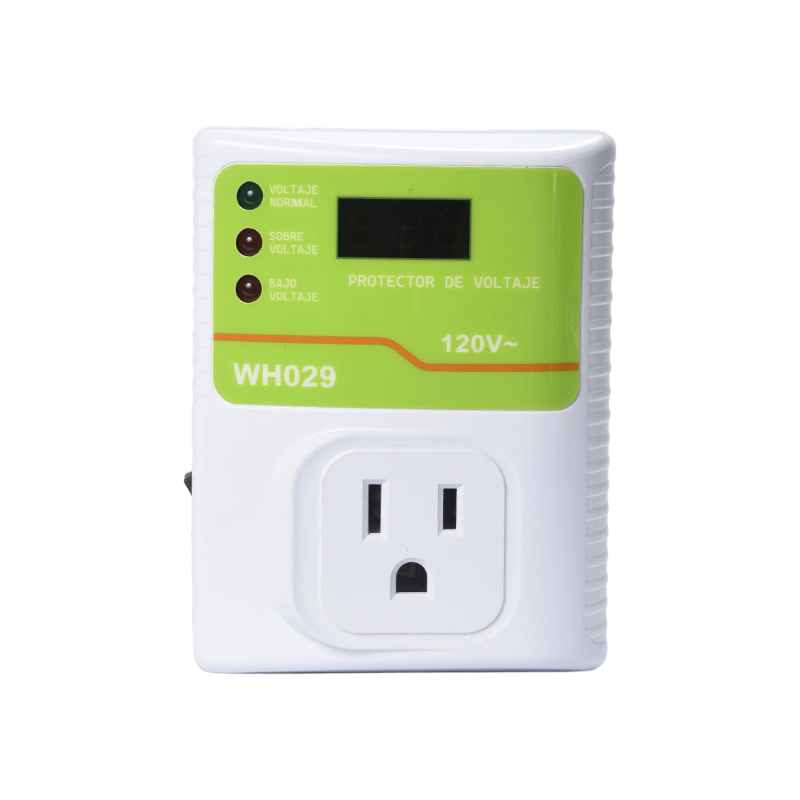
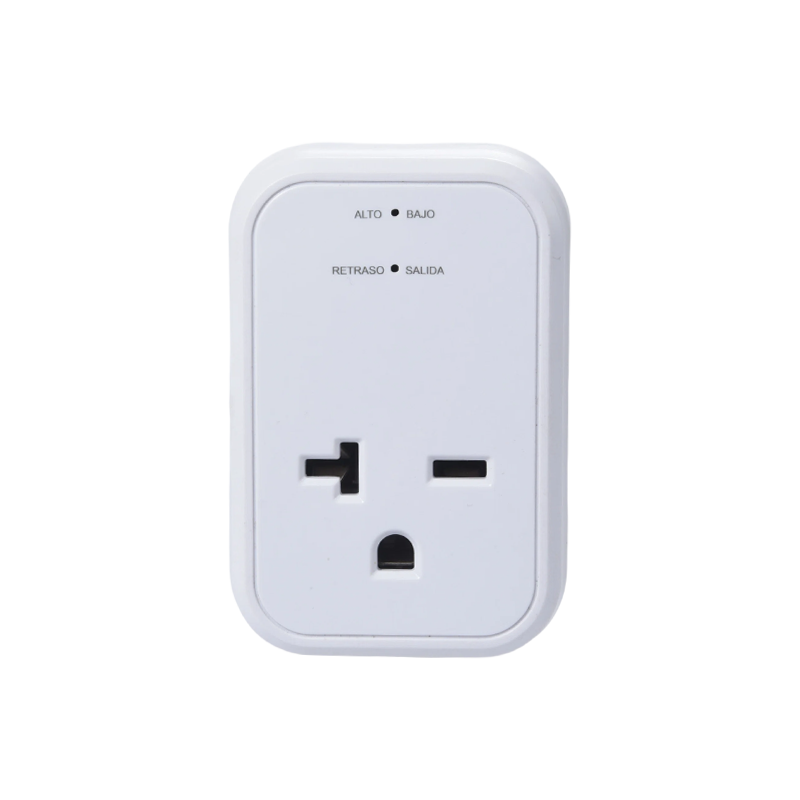
Air conditioners are the most common victims of sustained undervoltage. A compressor drawing locked-rotor current at 190 V instead of 220 V overheats quietly for months. That is why adjustable voltage protectors are widely installed on AC circuits — they cut power the moment voltage leaves the safe window. The HWTBV002 series covers the 220–230 V, 15 A profile of typical split air conditioners and restores power automatically when the grid recovers.
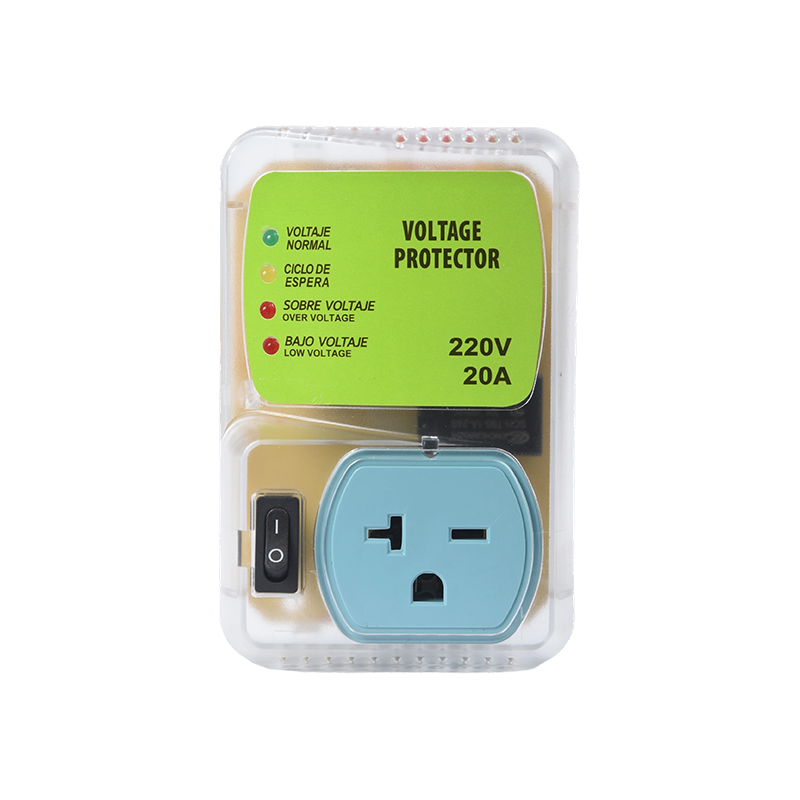 HWTB-V002+CE 220V 15A Adjustable Automatic Voltage Protector for Air ConditionersThis protector targets split air conditioners by cutting power when line voltage falls outside the adjustable 170–197V undervoltage window, then restores automatically after a 180-second delay. Its high-current design suits continuous compressor loads.View Product →
The Multi-Device Home Office Case
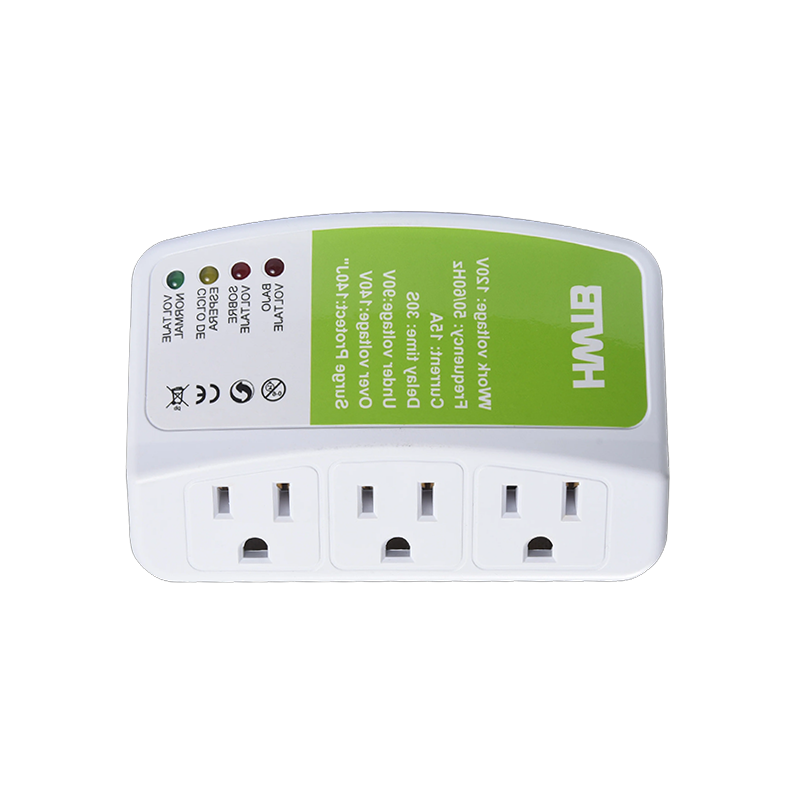
A desktop PC, monitor, router, and external drives often share one outlet. They face two distinct risks: lightning-coupled transients and ordinary voltage drift during peak hours. The HWTBV005 multi-outlet automatic voltage surge protector is the practical upgrade from a plain power strip — it holds the voltage band near nominal and clamps transients in the same pass.
 HWTB-V005-US 15A Multiple Outlet Automatic Voltage Surge ProtectionA 120V/60Hz power strip that combines undervoltage cutoff below 90V with 125J transient clamping and a 3-minute delayed restart, protecting desktop computers and peripherals from both voltage drift and surges.View Product →
Protecting Against the Wrong Threat Is the Costliest Mistake
"I had a surge protector and my inverter still died" is a recurring sentence in electrical forums. In most cases, the inverter was killed by chronic undervoltage. The surge protector did exactly what it was built to do — there was simply no surge to absorb.
Warning: The reverse failure is just as real. A lightning surge can destroy the transformer windings of an AVR before its regulation circuit reacts. For direct exposure, install a service-entrance arrestor upstream of the regulator, not downstream.
Danger: Never assume an AVR also provides surge protection. A relay-based regulator hit by a fast high-energy transient can lose its relay contacts and transformer in the same event, taking the device and the load offline together.
The practical rule: match the device to the dominant fault. A surge strip delivers zero value at a site that only sees brownouts. An expensive regulator provides poor value if the real killer is lightning exposure.
The Integrated Path: One Device, Both Fronts
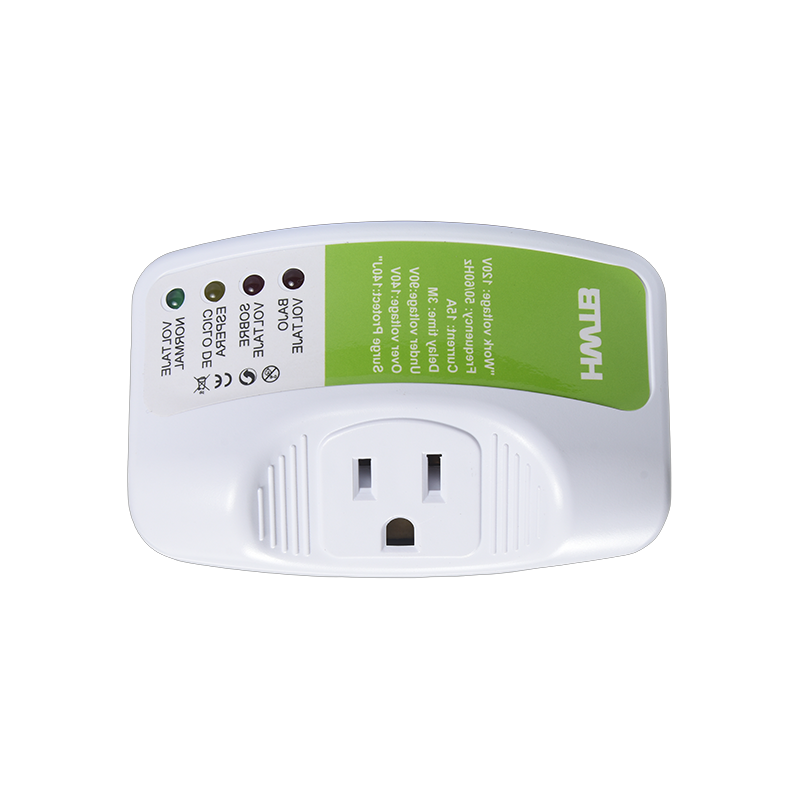
For most residential and light-industrial installations, the cleanest solution is a hybrid device: automatic voltage protection that disconnects the load on prolonged deviations, combined with MOV-based transient clamping on the input. This is where modern voltage protection has converged. Haowei Electric, for example, builds automatic voltage surge protectors like the HWTBV016 series that pair relay-based over/under-voltage disconnection with transient suppression, across both European and North American plug standards.
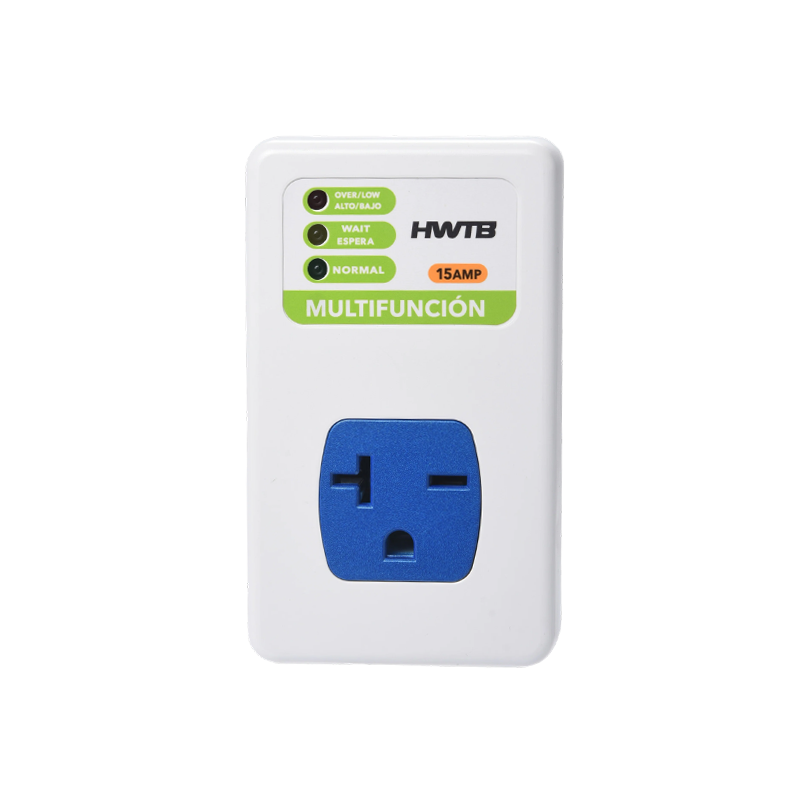 HWTB-V016-CE 230V 15A Automatic Voltage Surge ProtectorThis hybrid device disconnects the load during prolonged over- or undervoltage conditions and also absorbs transients with an optional 125J surge module. Its relay-based control suits televisions, fans, computers, and refrigerators.View Product →
An integrated unit simplifies installation and removes the coordination problem that appears when two separately purchased protectors disagree about which one should act first. The trade-off is the specification sheet: verify that the hybrid device's joule rating and voltage-correction band match your site profile before buying.
The Final Selection Rule
Select protection for the longest-duration disturbance your site actually experiences. Everything else is packaging.
Apply the rule in four steps:
- Audit the grid first. Measure voltage over time, or ask an electrician, before spending on any device.
- If brownouts dominate, choose an AVR or disconnect-style voltage protector. Do not expect a surge strip to stabilize anything.
- If transients dominate, choose surge protection with an adequate joule rating. For severe lightning, add an arrestor at the service entrance.
- If both threats are present, choose an integrated voltage and surge protector rather than stacking separate devices.
Bottom line: the automatic voltage regulator and the surge protector are siblings, not twins. Give each one the threat it was designed to handle, and your equipment finally gets the full protection layer it was meant to have.
Recommended Products
News
-
-
Power Quality & Equipment Longevity What Does a Voltage Protector Actually Do to Protect My Equipment? A quiet mechanism standing between your ap...
READ MORE -
Appliance Protection The Quiet Threat to Your Microwave: Why Voltage Protection Deserves a Second Look A practical guide to overvoltage and undervolt...
READ MORE -
Surge Arrester and Over/Under Voltage Protection Surge Arresters and Over/Under Voltage Protectors Are Not the Same Device One deflects lightning-sc...
READ MORE -
Power Protection Guide Do We Need a Voltage Protector for an Inverter? Most inverters defend themselves better than their owners expect. The equipmen...
READ MORE -
Voltage Compatibility — Residential & Industrial Buying Guide Will a Surge Protector Work on the Wrong Voltage? Usually Not — Here Is Why A 120 V...
READ MORE

Ningbo Haowei Electric Technology Co., Ltd.
-
Address
No. 261 Lvyuan 2nd Road, Chongshou Town, Qianwan New Area, Ningbo City, Zhejiang Province, China
-
Mobile
+86-13566611998
-
Email
Copyright © Ningbo Haowei Electric Technology Co., Ltd. Rights Reserved.
 Custom Smart Timer Plug Manufacturers